
For a long time, Rumphi in northern Malawi had no kindergarten. In August 2025, Little Stars opened – founded by our chair Racheal Hoepfner-Gausi, who grew up in Rumphi. Today it cares for 70 children aged eight months to six years, full day, including children with disabilities. They get breakfast and lunch every day, clean water and a place to learn.
The kindergarten was planned for 20 children. Now space has run out: there is nowhere for all the children to eat at once, and no safe outdoor play area.
Together with our local partner, we are changing that
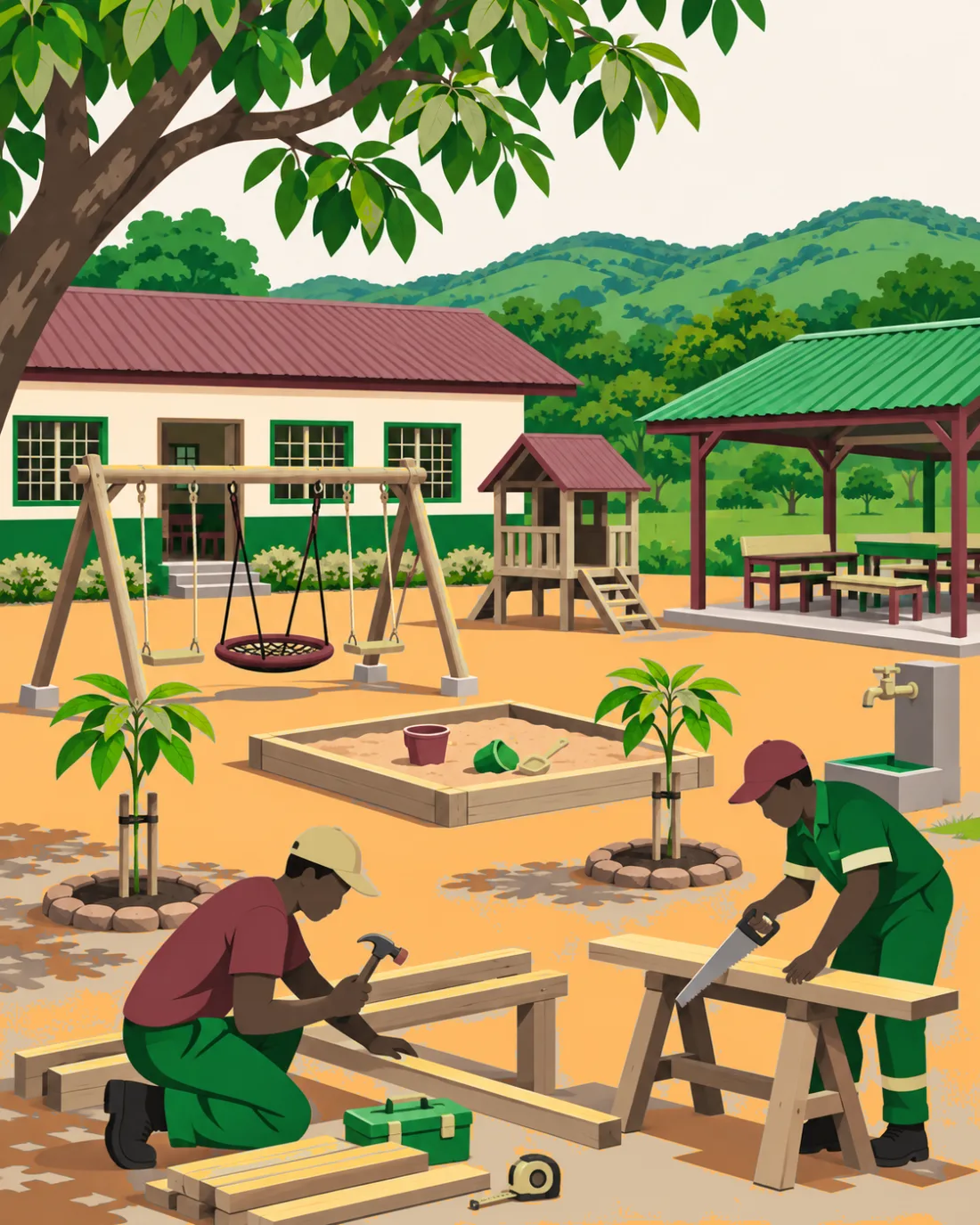
- a shaded roof with 40 seats for meals, painting and crafts
- swings, a playhouse and a climbing frame – including a round swing that children with disabilities can use too
- a large sandpit
- water in the outdoor area
- mango and orange trees for shade
Local craftsmen build it; parents and the community will look after it. After kindergarten hours, the space will also be open to older children and to the community for gatherings and celebrations.
Costs
| What we are building | Cost |
|---|---|
| Shaded shelter, approx. 25 m², with 40 seats and tables – metal and wood, built by local craftsmen | €3,700 |
| Wooden frame with 3 swings, including a round swing for toddlers and children with disabilities; playhouse and climbing frame | €2,000 |
| Sandpit, 4 × 4 m | €650 |
| Water supply in the outdoor area | €300 |
| Mango and orange trees for shade | €100 |
| Transport and meals for the craftsmen | €250 |
| Total (incl. €1,000 own contribution on site) | €7,000 |
Why this project matters
- Ready for school
- At home children speak Tumbuka, but school is taught in English from day one. At kindergarten they get to know the official language through play.
- Children with disabilities
- They are often left alone at home while parents work. Little Stars brings them out of isolation.
- Support for families
- Parents can work in the fields without taking their youngest into the heat and dust.
- Local jobs
- The kindergarten employs 8 caregivers plus kitchen staff.
We thank the Georg Kraus Stiftung for funding this project.